
A great desert event is not defined by whether it is hot. In Indio, it is defined by how thoughtfully the heat, timing, guest flow, and refreshment moments are planned around it. This Indio outdoor event guide is for hosts, planners, venue teams, and community organizers who want guests to remember the celebration, not the sun exposure.
Outdoor events are part of life in the Coachella Valley, from elegant weddings and resort gatherings to HOA socials, grand openings, school celebrations, and festival-weekend parties. The desert gives every event a beautiful backdrop, but it also asks for practical decisions early. A clear plan for comfort creates a more relaxed crowd, better participation, and a polished experience from arrival through the final goodbye.
Start With the Indio Outdoor Event Guide Basics
The first decision is not the menu or the playlist. It is the event window. Morning events can feel fresh and welcoming, while late-afternoon and evening celebrations make room for sunset photos, dinner, and more comfortable mingling. Midday can still work well, particularly for corporate functions, open houses, and community events, but it calls for more intentional shade, hydration, and cooling options.
Think about the guest experience in phases. Where do people park and enter? Is there a shaded first stop where they can orient themselves? How far must they walk before finding food, beverages, activities, or seating? When those basic transitions are easy, the event feels organized before the program has even begun.
Guest count matters, but it is not the only measure of scale. A smaller wedding with formal attire may need more cooling consideration than a casual neighborhood gathering with twice as many guests. Likewise, a large employee appreciation event may have attendees arriving in waves, which changes how you plan service areas and activity stations.
Build Comfort Into the Layout
Shade should support the way guests actually move, rather than exist as a separate corner of the venue. Place it near check-in, seating, family activity areas, dining zones, and high-interest features such as photo moments or entertainment. If an area is likely to draw a line, give that line protection too. Guests are much happier to wait when they are not standing in direct sun.
Create a layout with a natural rhythm: arrival, welcome, gathering, refreshment, activity, and departure. Avoid placing every attraction in one location. Spreading key moments across the space encourages movement without forcing guests to cross a hot, open area repeatedly.
Seating deserves similar attention. A few seats near each major zone can be more useful than one large seating area far from the action. This is especially valuable at multigenerational celebrations, resident events, and weddings where guests may appreciate opportunities to rest while remaining part of the occasion.
For events with children, designate a family-friendly area that is easy for caregivers to see and reach. For professional gatherings, consider a quieter shaded spot where colleagues can have a conversation without stepping away from the event entirely. Small layout choices make every guest feel considered.
Plan Refreshments Around Real Guest Behavior
At an outdoor event, refreshments are not an afterthought. They are a comfort feature, a social moment, and often one of the first things guests look for after arriving. The right option depends on the event’s formality, timing, guest count, and visual style.
For a backyard pool party or bachelorette celebration, a premium shaved ice station can bring color, energy, and a welcome cool-down without making the setting feel overproduced. For a wedding, a Paletero cart or customizable Ice Cream Cart can complement the event design while giving guests an easy, memorable treat between the ceremony and reception. At a larger corporate or community function, multiple service points and faster flow become more important than a single focal point.
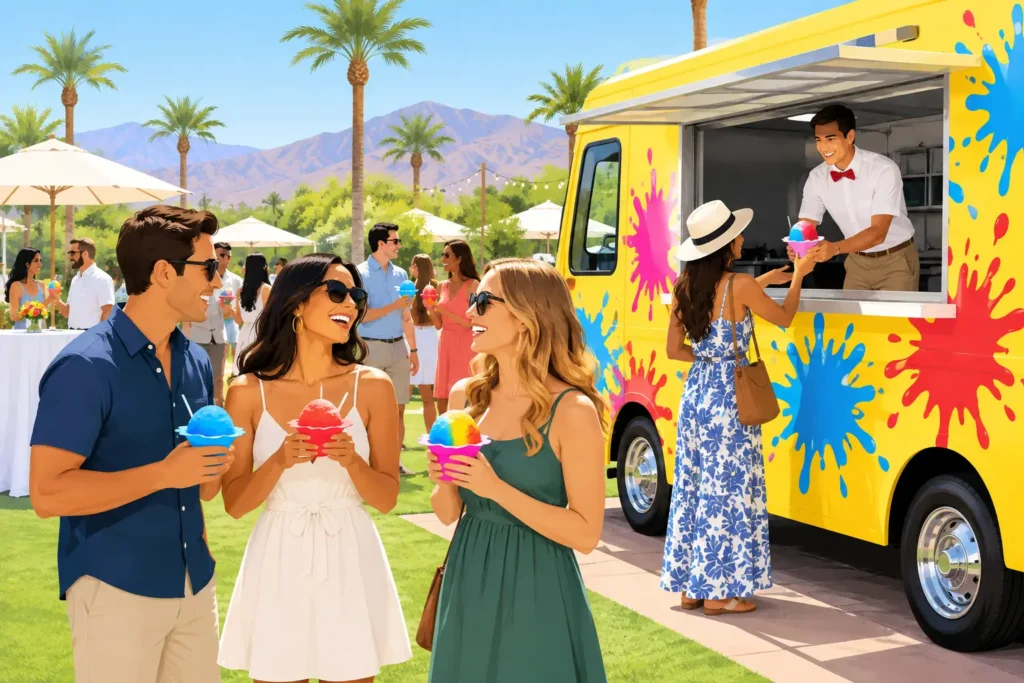
Desert Cone Zone has served Coachella Valley events since 2007, and one lesson remains consistent: the service format should match the pace of the gathering. The Cone Zone Bus creates a lively staffed destination for high-energy crowds. The Umbrella Stand fits naturally into poolside parties and backyard events. A Paleta Cart can bring a refined, welcoming presence to open houses, weddings, and hotel gatherings. For larger attendance, the Flavor Station lets guests apply their own shaved ice flavors, helping lines move while adding an interactive element.
Variety also matters. Guests have different preferences, and a well-planned frozen refreshment offering can include snow-like shaved ice in a wide range of flavors, sugar-free selections, Icy Lemonade, ice cream novelties, and dairy-free frozen fruit bars. That range makes it easier for every guest to find something enjoyable.
Keep Lines From Becoming the Main Event
A line is not always a problem. At the right moment, it can signal excitement. But a line that blocks circulation, sits in full sun, or forms just as a program begins can interrupt the experience you worked hard to create.
Start by placing popular stations near, but not directly within, the main gathering path. Guests should be able to approach and leave without cutting through a ceremony aisle, dance floor entrance, registration table, or buffet traffic. If your event has a fixed agenda, schedule a refreshment opening just before a natural break or social period rather than during speeches, presentations, or key announcements.
For larger events, consider how guests arrive. A company gathering may see a rush immediately after a shift change. A community event may build gradually and peak after entertainment begins. A wedding often has distinct moments, with demand rising after the ceremony and again later in the reception. Share that schedule with your service partners so staffing and presentation fit the real flow of the day.
Prepare for Desert Details Without Losing the Style
The practical pieces of outdoor planning do not need to make an event feel overly utilitarian. They can be incorporated into the design. Shade structures can complement the color palette. Clear signage can feel elegant or playful. A refreshment station can become a visual feature instead of something tucked away at the edge of the venue.
Wind is another consideration in Indio. Lightweight paper goods, loose décor, and tall signs may need extra thought, particularly in open properties. Choose sturdy table accents and keep guest-facing information simple and visible. If you are hosting at a private residence, country club, hotel, or public venue, walk the space at the same time of day as your event whenever possible. The angle of the sun can change how every area feels.
Communication makes the day easier, too. Let guests know what to expect through invitations, event reminders, or welcome signage. A simple note about outdoor conditions helps attendees dress comfortably and arrive prepared. For employee events and resident gatherings, this can be especially helpful when people are coming directly from work or arriving with children.
A Practical Pre-Event Check
In the final planning stage, confirm the details that shape guest comfort: arrival timing, shaded gathering areas, seating distribution, refreshment placement, signage, waste stations, and the event schedule. Then look at the plan from the perspective of someone attending for the first time.
Ask whether they can quickly find the welcome area, a place to sit, something cool to enjoy, and the next activity. If the answer is yes, the event is likely to feel easy and generous. If the answer is no, small adjustments now can prevent a lot of confusion later.
The most successful Indio gatherings leave room for the desert itself. Let the scenery set the mood, plan around the climate with confidence, and give guests a cool reason to linger a little longer!

Ready to Bring Cool Fun to Your Event?
The Coachella Valley's premier shaved ice & ice cream caterer since 2007!
Get a Quote